Archives
- 2026-08
- 2026-07
- 2026-06
- 2026-05
- 2026-04
- 2026-03
- 2026-02
- 2026-01
- 2025-12
- 2025-11
- 2025-10
- 2025-09
- 2025-03
- 2025-02
- 2025-01
- 2024-12
- 2024-11
- 2024-10
- 2024-09
- 2024-08
- 2024-07
- 2024-06
- 2024-05
- 2024-04
- 2024-03
- 2024-02
- 2024-01
- 2023-12
- 2023-11
- 2023-10
- 2023-09
- 2023-08
- 2023-07
- 2023-06
- 2023-05
- 2023-04
- 2023-03
- 2023-02
- 2023-01
- 2022-12
- 2022-11
- 2022-10
- 2022-09
- 2022-08
- 2022-07
- 2022-06
- 2022-05
- 2022-04
- 2022-03
- 2022-02
- 2022-01
-
NMR analyses support the above statement Compound is an inte
2022-04-09
NMR analyses support the above statement. Compound 32 is an interesting example of an isosteric analog of compounds 12–14. It has been demonstrated that 32 forms a rather stable six-membered ring via a hydrogen bond based on the chemical shift of the phosphorus purinergic receptor at the C-3 positio
-
lamotrigine Introduction Terpenoids also known as isoprenoid
2022-04-09
Introduction Terpenoids, also known as isoprenoids, constitute a large family of natural products comprising at least 22,000 compounds and play diverse and important roles in plants as hormones, phytosynthetic pigments, and electron carriers [1], [2]. In addition, volatilized terpenoids contribute
-
The urea derivatives a e were obtained
2022-04-09
The urea derivatives 7a–e were obtained from 1-(3-phenoxybenzyl)-piperazine (6) by reaction of isocyanate, or triphosgene and subsequent reaction of produced carbamoyl chloride with the amine RH as shown in Scheme 2. The imidazole urea 7g was prepared by reaction of 6 with 1,1′-carbonyldiimidazole.
-
Recent efforts have also tried to identify
2022-04-09
Recent efforts have also tried to identify cancer subsets that are exquisitely responsive to EZH2i apart from those bearing EZH2 gene mutation (Knutson et al., 2012). The dysfunction of SWI-SNF complex, a chromatin-remodeling regulator that partially antagonizes the catalytic function of PRC2 comple
-
The above inferences concluded that histidine
2022-04-09
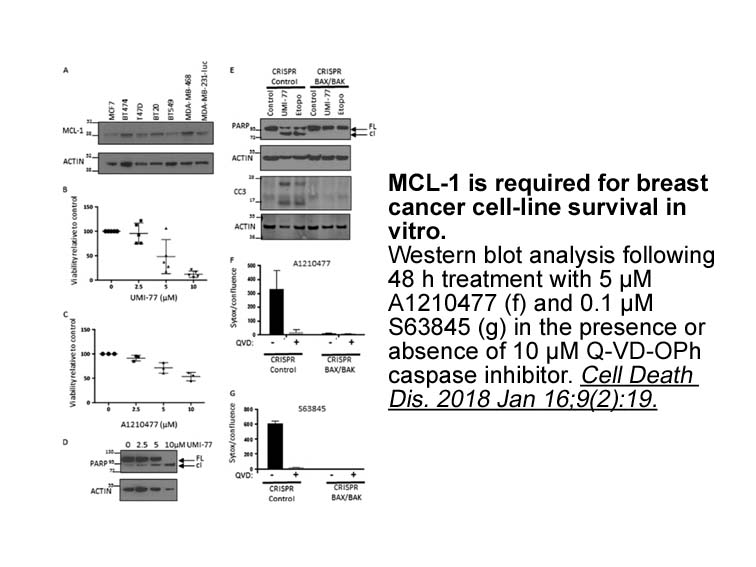
The above inferences concluded that histidine is enhancing the overall stability and rigidity of the protein which further might be restraining the protein during the transition from inactive to active state and vice-versa present in the SANT domain. Since the SANT domain binds with histone via elec
-
Recent studies are beginning to explore this
2022-04-09
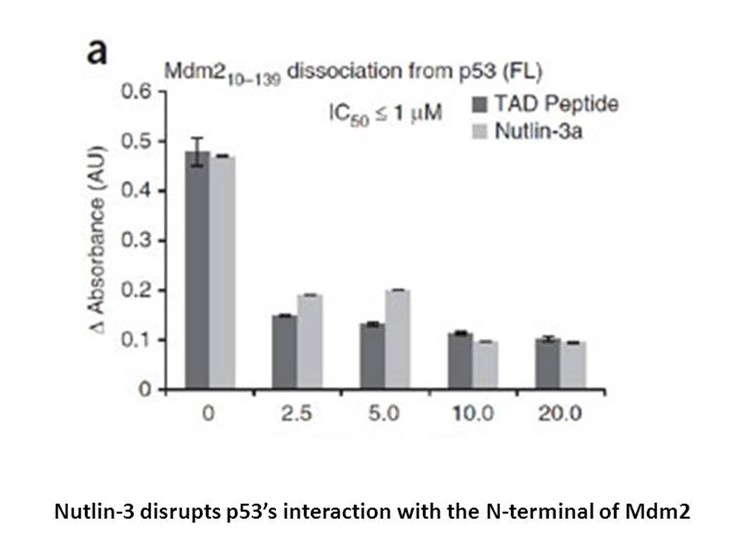
Recent studies are beginning to explore this complex interplay of pathways. For example, intracellular trafficking of poly(lactic-co-glycolic acid)(PLGA) based nanoparticles was studied in detail using 30 different Rab proteins as markers for intracellular transport vesicles (involved in exocytosis,
-
br Formation of secretory vesicles and trafficking
2022-04-09
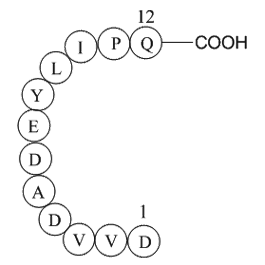
Formation of secretory vesicles and trafficking toward plasma membrane Insulin and other components of the secretory granules are sorting and providing certain cues for Proteinase K off the adjacent TGN membrane, forming immature secretory clathrin coated vesicles (Gehart and Ricci, 2013). Bin/A
-
The above mentioned studies are
2022-04-09
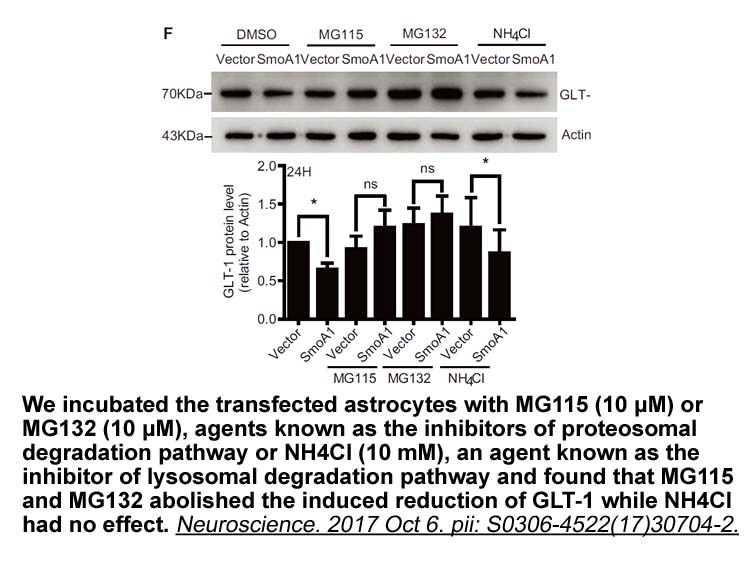
The above-mentioned studies are especially important since the structural alterations of the peritoneum during peritoneal dialysis are very similar to vascular and tissue alteration seen in diabetes. The tissue alterations during long-term peritoneal dialysis include a thickening and replication of
-
br Introduction Over one million people are currently living
2022-04-09
Introduction Over one million people are currently living with HIV in the United States (CDC, 2016). Through advances in HIV medications, the use of antiretroviral therapy has led to people living longer with HIV (Palella et al., 2006). In attempts to mitigate the effects of the psychological and
-
br Introduction Stroke is the
2022-04-09
Introduction Stroke is the second cause of death worldwide and the first cause of acquired motor disability in adults [1], [2]. In sub-Saharan Africa, stroke is the first cause of admission in neurology departments [3]. In Cameroon, the in-hospital mortality of stroke is estimated at 26.8% [4]. A
-
Treatment with histamine had no effect on
2022-04-09
Treatment with histamine had no effect on histamine H1 receptor expression in HepG2 PKI-402 (Fig. 1), while knockdown of histamine H1 receptor expression prevented histamine from repressing apo A-I gene expression (Fig. 2). Overexpression of the histamine H1 receptor regulated apo A-I promoter activ
-
As an inflammatory mediator histamine plays a pivotal role i
2022-04-09
As an inflammatory mediator, histamine plays a pivotal role in nociceptive processes in both the central and peripheral nervous systems (Gemkow et al., 2009; Hough & Rice, 2011; Tiligada et al., 2009). In this respect, the participation of H3Rs in modulating pain, especially neuropathic pain, has at
-
br STAR Methods br Acknowledgments We
2022-04-09
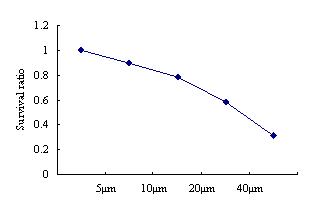
STAR★Methods Acknowledgments We thank P. Adler, V. Riechmann, N. Tapon, E. Knust, the Vienna Drosophila RNAi Center, the Australian Drosophila Research Support Facility (www.ozdros.com), the Bloomington Drosophila Stock Center, and the Developmental Studies Hybridoma Bank for D. melanogaster s
-
CPI-203 br Substrate Interactions Outside of the Catalytic C
2022-04-08
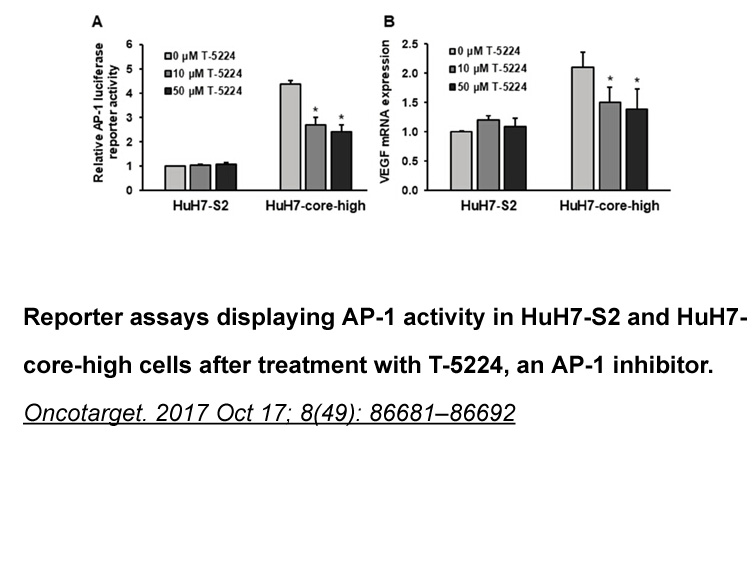
Substrate Interactions Outside of the Catalytic Cleft As for other types of protein–protein interactions, kinase–substrate docking interactions can occur through large binding interfaces or through recognition of short linear sequence motifs. For kinases with a large number of substrates, the use
-
Also in this work we investigated the correlated signaling p
2022-04-08
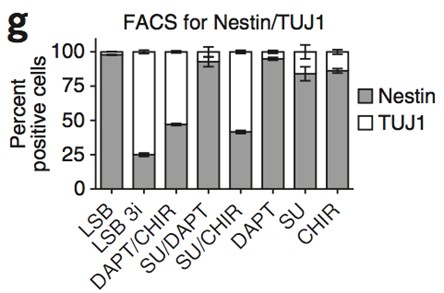
Also in this work, we investigated the correlated signaling pathways of GSK-3 inhibition in protecting bupivacaine-induced DRG neurotoxicity. Through western blot assay, we demonstrated that, SB216763 suppressed protein productions of p-GSK-3 α/β and Casp-3, but increased protein production of PKC,
8404 records 500/561 page Previous Next First page 上5页 496497498499500 下5页 Last page