Archives
- 2026-08
- 2026-07
- 2026-06
- 2026-05
- 2026-04
- 2026-03
- 2026-02
- 2026-01
- 2025-12
- 2025-11
- 2025-10
- 2025-09
- 2025-03
- 2025-02
- 2025-01
- 2024-12
- 2024-11
- 2024-10
- 2024-09
- 2024-08
- 2024-07
- 2024-06
- 2024-05
- 2024-04
- 2024-03
- 2024-02
- 2024-01
- 2023-12
- 2023-11
- 2023-10
- 2023-09
- 2023-08
- 2023-07
- 2023-06
- 2023-05
- 2023-04
- 2023-03
- 2023-02
- 2023-01
- 2022-12
- 2022-11
- 2022-10
- 2022-09
- 2022-08
- 2022-07
- 2022-06
- 2022-05
- 2022-04
- 2022-03
- 2022-02
- 2022-01
-
We conclude that Tetrapleura tetraptera fruits extract posse
2024-09-27

We conclude that Tetrapleura tetraptera fruits extract possess antiplasmodial activity and the results of this study justifies and confirms the traditional usage of this plant as malarial remedy. Acknowledgement Introduction The phylum apicomplexa comprises of nearly 5000 species, most of whi
-
br Acknowledgements We thank the
2024-09-27
Acknowledgements We thank the National Natural Science Foundation of China (41576156), Shandong Province Science and Technology Development Plan (2015GSF121045), Yantai Science and Technology Development Plan (2015ZH078), and the Public Science and Technology Research Funds Projects of Ocean (No.
-
Vascular interventional radiology VIR laboratories perform a
2024-09-27
Vascular interventional radiology (VIR) laboratories perform a myriad of procedures ranging from simple tunneled peripherally inserted central catheter lines to complex transjugular intrahepatic portosystemic shunt placements. Infections are a common complication in the VIR environment; thus, the pr
-
Sustained release property is also associated with side
2024-09-27
Sustained release property is also associated with side effects reduction [16] that could be confirmed by histopathological analyzes. Massive infiltrating inflammatory cells, hyperproliferation of skin layers and keratin pearls, caused by DMBA and croton oil application [32] are attenuated in Imq-lo
-
br Author contributions br Financial disclosures br Acknowle
2024-09-26
Author contributions Financial disclosures Acknowledgements We thank Ms. Eva So for the editorial assistance. This work was supported by grants from the National Natural Science Foundation of China (No. 81622015, 81571042 and 81501143) and the National Basic Research Program of China (No. 2
-
The mechanism of transformation into SCLC is unclear but the
2024-09-26
The mechanism of transformation into SCLC is unclear but the loss of retinoblastoma gene (RB) seems important and constitutes an initial event in the tumorigenic process. Some reports revealed the role of the RB gene loss in EGFR mutated NSCLC who transformed into SCLC [15]. In NGS we retrieved mut
-
Linear polyethylenimine for gene delivery HsALDH enzyme has
2024-09-26

HsALDH enzyme has been purified for the first time in our laboratory from human saliva and has been kinetically characterized using different aromatic substrates [35]. Also, the effect of some common substances frequently encountered by the enzyme in the oral cavity (such as ethanol, hydrogen peroxi
-
Most of the modifications in the sympathetic
2024-09-26
Most of the modifications in the sympathetic nervous system occurring with aging, including decreased βAR responsiveness, increased circulating catecholamines, and overall hyposensitivity to adrenergic stress, are also observed in patients with failing hearts. Moreover, young people are more reactiv
-
br Conclusions The present data suggest that homeostatic bal
2024-09-26
Conclusions The present data suggest that homeostatic balance of the cortical/hippocampal adenosinergic tone is necessary for normal working memory function and any deviation appears to impair performance – either as a consequence of A2AR under-activation when adenosine levels are reduced or due
-
br Conclusion Biotransformation of trachyloban oic acid
2024-09-26

Conclusion Biotransformation of trachyloban-19-oic Paprotrain by S. racemosum provided three products. Oxidation of compound 1 at C-17 (2–3), as well as rearrangement of 1 into a kaurane diterpene hydroxylated in C-16 and C-17 (4) were crucial for increasing AChE inhibitory activity. Compound 3
-
br Experimental section br Results and discussion
2024-09-26
Experimental section Results and discussion Conclusion Acknowledgements This work was financially supported by Recruitment Program of Global Experts, and the Director Foundation of XTIPC, CAS, Grant No. 2015RC011. This work was also financially supported by Natural Science Foundation of
-
The next level of possible correlation and comparison betwee
2024-09-26
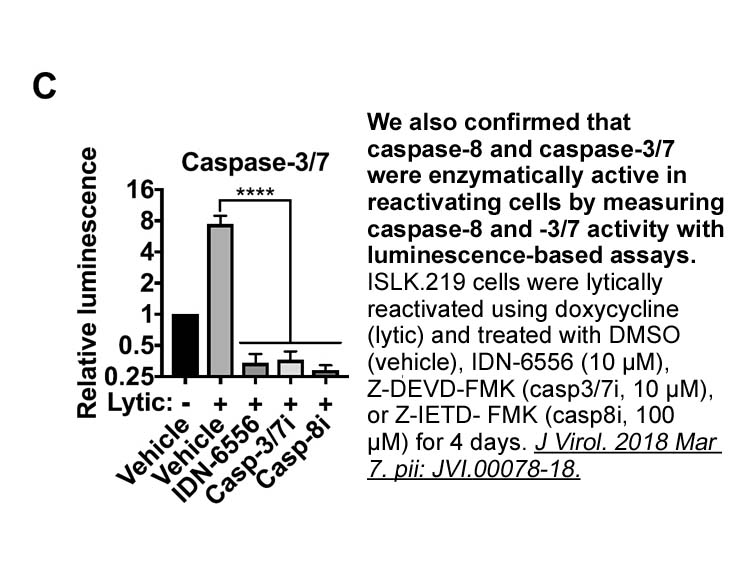
The next level of possible correlation and comparison between the α7 and 5HT3 receptors is at the subunit arrangement and protein folding. Crystal structures of the nicotinic and serotoninergic GMX1778 receptors [45], [46] reinforced the concept of similarities between these families of receptors. N
-
br Conclusion In this brief Letter we report an
2024-09-26
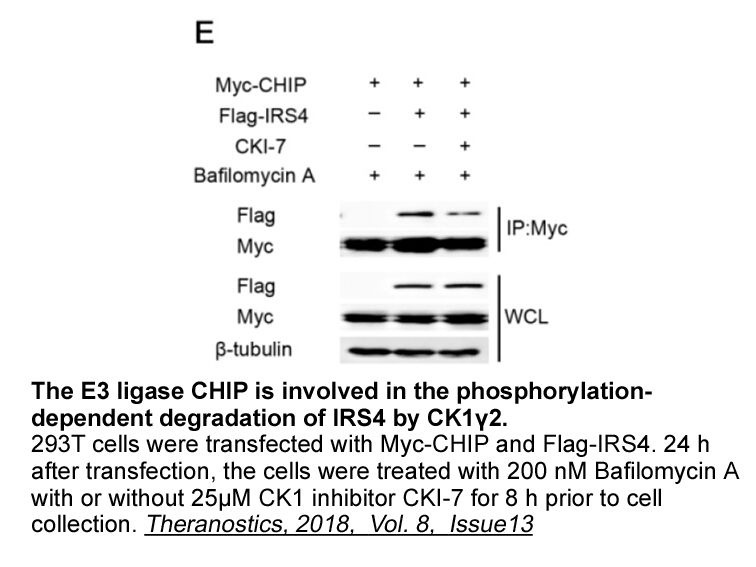
Conclusion In this brief Letter, we report an easy method for the preparation of the antileukemic natural product 1. Using a biomimetic strategy,1, 8 in which the aromatic residues are attached to a lysine moiety prior to the reduction of the central carboxylate group, a step-economical synthesi
-
Direct inhibition of LO activity by BRP is clearly
2024-09-26
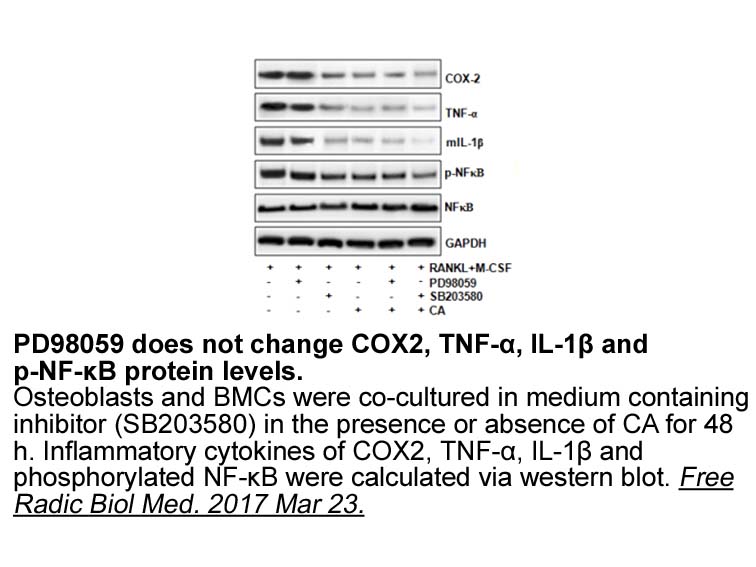
Direct inhibition of 5-LO activity by BRP-187 is clearly evident in cell-free assays using PMNL homogenates and isolated human recombinant 5-LO as enzyme source. In such assays, pure FLAP inhibitors like MK886 are inactive [9], [10], [29], [44]. Wash-out experiments and studies using the nonionic de
-
For both the hydroxylation and lyase reactions the heme iron
2024-09-26
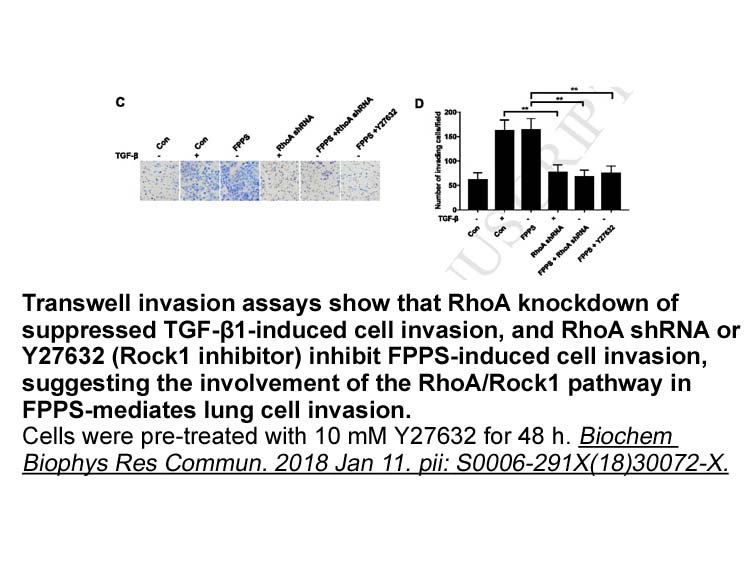
For both, the 17α-hydroxylation and 17, 20-lyase reactions, the heme iron center of P450 17A1 receives electron reducing equivalents from CPR. Both reactions require one pair of electrons and molecular oxygen for the conversion of the substrate into product in each catalytic cycle. However, the 17,2
8404 records 107/561 page Previous Next First page 上5页 106107108109110 下5页 Last page